
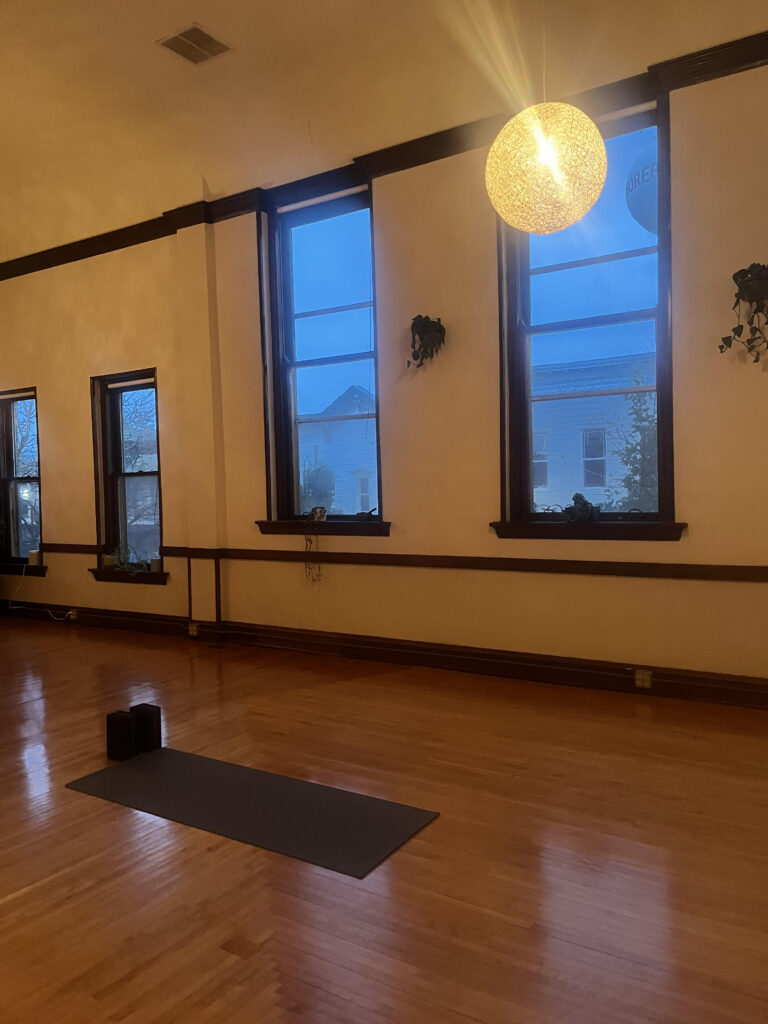
As we draw toward the end of our calendar year, we find ourselves grabbing breakfast with light barely piercing through the night and tucking into dinner completely cloaked in darkness. The winter solstice marks the shortest amount of light, and in turn, the longest amount of darkness in 24 hours for the northern hemisphere. This increase in darkness can leave us feeling unsettled, unfocused, unmotivated, and unhappy. That’s a lot of “uns”! But why?
Our mood changes related to the increased hours of darkness can be rooted in a variety of causes. The change in daylight hours can alter our circadian rhythms and increase our melatonin levels, causing us to feel tired more easily. Our serotonin levels (a “feel-good” hormone) can decrease, leaving us feeling irritable and unmotivated. We can also be missing out on the wonders of vitamin D, which our body produces with the help of sunlight. All of these factors can leave us with a case of the “winter blues”.
Our response to this change in daylight is not exclusive to us here in southern Wisconsin. People all across the globe are experiencing the same chemical responses to the increasing darkness and lack of sunlight. So how is it that the folks in Denmark are consistently ranked among the happiest in the world? Denmark experiences even more darkness than we do here in southern Wisconsin, so what’s up?
There are a myriad of reasons that the Danes may be earning this ranking at the top of the happy scale. One of them is their dedication to hygge. To what? Hygge, pronounced similar to “hooga” or “hougir” (depending on your source), is a concept that many Danes say cannot be translated. Most folks associate hygge with “coziness,” but there is so much more to it than that.
The concept of hygge started to gain popularity in the United States in 2016 when it was short-listed on Oxford’s “Word of the Year” list. Since then, folks here in the states have dug into this Danish concept. In true American fashion, we have built an industry around “hygge” with a myriad of products available for us to buy our way into a hygge lifestyle. Is that even possible?
Perhaps “hygge” can’t be directly translated, but there are some key components that contribute to something being hyggelig (the adjective form of hygge). According to Meik Wiking, the CEO of the Happiness Research Institute in Copenhagen, there are 10 tenants to “The Hygge Manifesto”. These are:
- Atmosphere
- Presence
- Pleasure
- Equality
- Gratitude
- Harmony
- Comfort
- Truce
- Togetherness
- Shelter
In his book “The Little Book of Hygge”, Wiking goes into detail about how to embrace these concepts into your homelife by setting the stage, creating the appropriate atmosphere, and incorporating a variety of practices into your life. There are little projects, activities, and tips to create a more hyggelig lifestyle. In short, you don’t need to buy your way into a hyggelig way of life. By creating a soft, warm, and inviting atmosphere, spending time with loved ones, offering yourself kindness and grace, tucking in to the things that are pleasurable, and just simply slowing down, you are bringing hygge into your world.
But how does hygge pertain to our yoga practice? These two practices are well suited for one another, and we can easily incorporate hygge into our yoga routines. Yoga lends itself to creating a cozy and supportive space. We can bring ourselves to a greater place of presence and intention when we step onto the mat. We can slow down.
During this season of darkness, let’s join together and find our way to hygge. We can create a calm and cozy atmosphere and approach transitions with a gentle intention. Our focus on poses can be rooted in supportive poses and incorporate bolsters, blankets, and blocks to help us feel grounded. We can gather together and enjoy the company of those we enjoy seeing each time we step into the studio, bringing a sense of community to our practice. This community can bring joy to the darkness! Our presence at the studio can be an intentional act of hygge when we bring a new level of mindfulness, grace, and warmth to our practice.
So this season, as our earth continues to spin through the darkness, let’s gather together in our beautiful space and invite hygge into our winter experience. Who knows, maybe we’ll find some of that happiness the Danes are known for! Can’t wait to see you all on the mat.
(If you would like to learn more about hygge check out “The Little Book of Hygge” by Meik Wiking or “Hygge, The Danish Art of Happiness” by Marie Tourell Søderberg.)